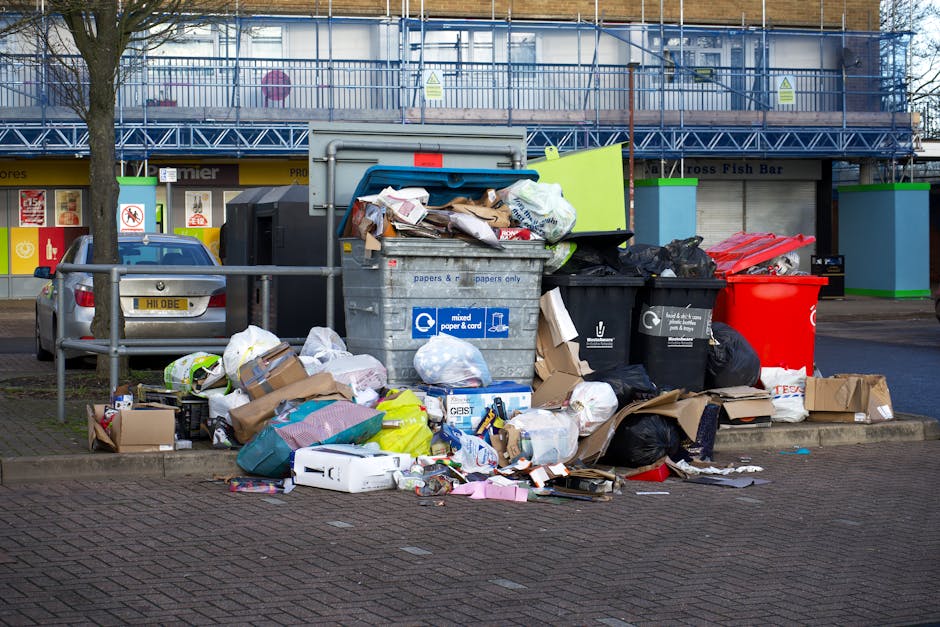
Gatwick Area Commercial Rubbish Removal for Shops and Offices: A Practical Guide for Busy Businesses
If you run a shop, manage an office, or oversee a mixed-use commercial space near Gatwick, rubbish has a habit of turning up at the worst possible time. Broken packaging after a delivery, old shelving from a refit, tired office furniture, dead electronics, or just the steady build-up of day-to-day waste - it all needs to go somewhere. That is where Gatwick area commercial rubbish removal for shops and offices becomes less of a nice extra and more of a practical necessity.
This guide explains how the process works, what it is suitable for, what to watch out for, and how to keep things efficient, tidy, and compliant. You will also find a checklist, a comparison table, and a few honest, real-world pointers that can save time and hassle. Simple enough. But useful? Definitely.
Table of Contents
- Why it matters for Gatwick shops and offices
- How the rubbish removal process works
- Key benefits and practical advantages
- Who this is for and when it makes sense
- Step-by-step guidance
- Expert tips for better results
- Common mistakes to avoid
- Tools, resources and recommendations
- Law, compliance, standards and best practice
- Options, methods and comparison table
- Case study or real-world example
- Practical checklist
- Conclusion
- Frequently asked questions
Why Gatwick Area Commercial Rubbish Removal for Shops and Offices Matters
Commercial waste is not the same as a bag or two of household clutter. Shops and offices produce a broad mix of rubbish, and it often appears quickly: cardboard from stock deliveries, food packaging from staff areas, printer boxes, broken chairs, end-of-line display units, archive clear-outs, and the odd mystery item no one wants to claim. It stacks up fast, especially in busy business districts where space is tight and access can be awkward.
Near Gatwick, timing matters as well. Retail units and offices often work around customer traffic, shift patterns, deliveries, and sometimes security-controlled buildings. If waste is left in walkways, fire exits, loading bays, or shared service areas, it can become a nuisance very quickly. It looks untidy, sure, but it can also affect safety, reputation, and day-to-day operations.
Let's face it: customers notice clutter. Staff notice it too. And in an office, the quiet drag of a cluttered environment can affect focus more than people admit. A clear workspace feels calmer. A clean shop floor feels more professional. A tidy back-of-house area makes everyone's life easier, even if nobody throws a parade about it.
For businesses that want a straightforward route, a well-organised service backed by clear policies is worth looking for. It helps to understand not just what gets taken away, but how the provider handles safety, payments, complaints, and recycling. Those details matter. If you want to review the company's broader approach, the pages on about us and recycling and sustainability are useful starting points.
How Gatwick Area Commercial Rubbish Removal for Shops and Offices Works
In practical terms, commercial rubbish removal is the collection and disposal of business waste that cannot simply stay on site. The service is usually arranged around your schedule, your access points, and the kind of items you need removed. That might be a one-off clearance after a refit, or it could be a recurring arrangement for larger volumes.
A typical job starts with a description of what needs removing. Good providers will want to know the approximate volume, the type of waste, where it is located, and whether there are any access issues. If there are stairs, narrow corridors, loading restrictions, or shared entrances, say so early. It saves everyone a headache later.
On the day, the team usually arrives, assesses the waste, confirms the plan, and removes the items. For shops, that often means clearing stockroom waste, packaging, broken display fittings, old point-of-sale materials, and obsolete furniture. For offices, it may involve desks, chairs, filing cabinets, archived paperwork, monitors, and general office junk that has quietly multiplied over the years. It happens.
The best services also separate recyclable materials where possible and keep you informed about anything that needs special handling. That is particularly important for electronics, confidential paperwork, or anything that might be classed as hazardous or restricted. A quick conversation before booking avoids awkward surprises on collection day.
If you are pricing a job or comparing quotes, it helps to look beyond the headline figure. The company's pricing and quotes page can help you understand how commercial removals are usually approached, while contact us is the sensible next step if you need a tailored discussion.
Key Benefits and Practical Advantages
There are several reasons businesses in the Gatwick area choose professional rubbish removal instead of trying to handle everything in-house. Some are obvious. Some are the kind people only appreciate once they have wrestled a filing cabinet down a corridor themselves.
- Less disruption: Removal is done efficiently, often at times that suit the business.
- Better presentation: Cleaner premises create a more professional impression for staff and visitors.
- Safer work areas: Fewer trip hazards, blocked exits, and overloaded storage corners.
- Time saved: Staff can stay focused on customers, admin, or operations instead of disposal logistics.
- More reliable waste handling: Items are sorted, lifted, and removed in a controlled way.
- Recycling potential: A responsible provider will aim to divert suitable materials from landfill where possible.
There is also a quieter but important benefit: mental clarity. A cluttered back office can feel strangely heavy. Once it is cleared, the place often feels lighter and easier to work in. You notice it in the way people move through the space. Faster, less tense, a bit more purposeful. That sounds small, but in a busy business day it matters.
Expert summary: The best commercial rubbish removal service is not just one that takes things away quickly; it is one that understands commercial access, keeps disruption low, handles waste responsibly, and gives you a process you can trust.
Who This Is For and When It Makes Sense
This kind of service is a good fit for a wide range of businesses around Gatwick and nearby commercial areas. It is not limited to one industry. If your premises generate bulky, awkward, or excess waste, you are probably in the right category.
Common users include:
- Independent shops
- Retail chains and franchise locations
- Offices of all sizes
- Showrooms and sales suites
- Small business units in managed estates
- Professional services firms
- Landlords and managing agents arranging end-of-tenancy clearances
It makes sense when you have one-off waste after a fit-out, a stock refresh, a relocation, a closure, or a seasonal clear-out. It also makes sense if your internal waste storage is getting out of hand and you need a reset before it starts interfering with business operations.
For offices, the trigger is often a move, a downsizing, or a general "we should deal with this now" moment after years of boxes quietly collecting in cupboards. For shops, it might be after a new display launch, a delivery backlog, or the annual stock tidy-up that somehow becomes an all-day event.
If you are unsure whether your waste is suitable, ask before booking. In particular, items such as confidential documents, batteries, fluorescent tubes, and electrical goods may need extra care. A proper conversation is better than guessing.
Step-by-Step Guidance
If you want the process to run smoothly, a little preparation goes a long way. You do not need to overthink it, but a structured approach reduces delays and helps the collection team work quickly.
- List the items to be removed. Make a rough inventory: furniture, packaging, office junk, old stock, IT equipment, or mixed waste.
- Separate what should stay. This sounds obvious, but mixed piles are where mistakes creep in. Keep important files, reusable stock, and personal items away from the clearance area.
- Check access. Note loading bays, lifts, stairways, parking restrictions, and any building rules.
- Flag sensitive waste. Tell the provider if there is confidential paper, electronics, or items that may require careful handling.
- Ask for a clear quote. Make sure the estimate covers labour, vehicle use, access considerations, and disposal expectations.
- Choose a suitable time. Early morning, after closing, or during quieter trading windows often works best.
- Prepare the site. Clear a path, keep staff informed, and let reception or security know the team is coming.
- Check the final result. Walk the area afterwards to confirm everything agreed has been removed and the site is left tidy.
A small real-world observation: the jobs that go best are usually the ones where someone has spent ten minutes planning and ten minutes communicating. Not glamorous. Very effective.
Expert Tips for Better Results
After enough clearances, you start to see the same patterns. The good news is that a few simple habits can make a commercial rubbish removal job faster, cleaner, and more cost-effective.
1. Group similar waste together
Cardboard, office furniture, soft waste, and electrical items are easier to assess when they are grouped sensibly. It helps the team plan loading and sorting without stopping every few minutes to ask what something is.
2. Measure the awkward stuff
Large desks, storage units, and display fixtures sometimes look manageable until they meet a narrow doorway. A quick width and height check can prevent a frustrating moment at the worst possible time.
3. Be honest about volume
If you think the pile is "about half a van," say so only if that is genuinely your best estimate. Underselling the amount usually causes delays; overselling can make the quote less accurate. A few photos can help, and they are easy enough to send.
4. Plan around your customer flow
For shops, avoid peak footfall if possible. For offices, try to work around meetings, deliveries, and busy desk periods. In practice, a quiet slot early in the day often works well. Not always, but often.
5. Keep compliance in mind from the start
It is easier to handle electronic waste, confidential papers, or mixed business waste correctly if you identify it before collection rather than after the pile is already in the doorway.
If you want to understand the company's operational standards, the health and safety policy and insurance and safety pages are worth reading. They help set expectations before anyone steps on site.
Common Mistakes to Avoid
Most commercial waste headaches are preventable. Usually, the problem is not the rubbish itself. It is the planning around it.
- Leaving booking too late: A last-minute clear-out can force rushed decisions and awkward scheduling.
- Not checking what is included: Some quotes look simple until access issues, labour time, or special waste handling appear later.
- Mixing reusable items with waste: That can lead to accidental disposal of something valuable.
- Ignoring building rules: Shared premises often have strict collection windows or loading arrangements.
- Assuming all rubbish is the same: Commercial waste can involve different handling requirements. A one-size-fits-all approach can go wrong.
- Skipping the post-clearance check: Always confirm that the agreed items are gone and the area is left tidy.
One slightly annoying but very real issue: people often forget about the "small stuff" - cables, brackets, old signage, and bits of packaging tucked behind cupboards. Then they notice them later and wonder why the room still feels unfinished. Happens all the time.
Tools, Resources and Recommendations
You do not need specialist equipment to prepare for most clearances, but a few basic tools help with organisation and speed. The aim is not to turn your team into removal operatives. It is simply to make the handover smooth.
- Boxes or crates: Useful for sorting small items, accessories, and desk clutter.
- Tape and labels: Handy for marking what stays, what goes, and what needs special handling.
- Rough floor plan or access notes: Especially helpful in multi-unit buildings or offices with restricted routes.
- Phone photos: Still one of the easiest ways to explain the scope of a job.
- Staff checklist: Helps everyone know what should be cleared before the team arrives.
For operational trust and general business confidence, it is sensible to review pages such as payment and security, terms and conditions, and privacy policy. These are the kinds of pages people tend to skim, then later realise they were useful all along. Funny how that works.
If you are comparing providers, also look at how they discuss customer service, recycling, and complaints handling. A business that is open about how it works is usually easier to deal with if anything needs clarifying later.
Law, Compliance, Standards and Best Practice
Commercial rubbish removal in the UK sits within a broader framework of waste handling responsibilities, safety expectations, and general business duty of care. You do not need to become a legal specialist to book a clearance, but you should expect the provider to work safely and sensibly.
In practical terms, this means a few things. Waste should be handled by people who understand what they are moving, where it is going, and whether any part of it needs special treatment. The provider should have an organised approach to lifting, loading, vehicle safety, and site protection. If they are dealing with business waste, they should also be able to explain how they manage disposal and recycling at a high level.
For the customer, best practice is straightforward: be accurate about the waste type, identify anything sensitive or potentially problematic, and keep an eye on the site conditions. If there is a fire exit, shared corridor, security zone, or loading restriction, mention it. The more transparent the handover, the fewer problems later.
It is also sensible to choose a company that is open about safety and complaints procedures. That does not mean you expect trouble. It means you are dealing with a business that has thought through the work properly. The pages on complaints procedure, accessibility statement, and modern slavery statement support that kind of transparency.
One practical point worth repeating: if your waste includes confidential paper or electronic equipment, treat that as a separate conversation. Better to be careful than casual. No drama, just good business sense.
Options, Methods and Comparison Table
Not every business needs the same solution. Some simply need a one-off bulk removal. Others need regular support. And some are best served by a broader clearance approach because the waste is mixed with redundant stock or office contents.
| Option | Best for | Advantages | Things to consider |
|---|---|---|---|
| One-off commercial rubbish removal | Clear-outs, refits, relocations, seasonal resets | Simple, fast, flexible | Best when the waste volume is temporary |
| Recurring waste collection support | Businesses with regular overflow or bulky waste | Predictable and convenient | Requires steady scheduling and clear expectations |
| Office furniture clearance | Desk, chair, cabinet, and meeting-room changes | Good for awkward bulky items | Check access routes and disassembly needs |
| Shop waste and fit-out clearance | Retail refits, stockroom resets, packaging waste | Helps restore trading space quickly | Coordinate around opening hours |
| Mixed commercial clearance | Offices or shops with varied waste types | Flexible, practical for complex jobs | Needs better sorting and accurate job description |
Choosing the right option usually comes down to three questions: how much waste there is, how quickly it needs to go, and how disruptive the site is likely to be. If you answer those honestly, the decision gets much easier.
Case Study or Real-World Example
Here is a realistic example based on the kind of work businesses often need in the Gatwick area. A small office had recently changed layout after a team restructure. Nothing dramatic, just the usual shuffle of desks, storage units, boxes of old files, and a few chairs that had definitely seen better days. The back room had become a sort of temporary holding bay. You know the kind of place: one day it is storage, then suddenly it is a maze.
The team needed the space cleared before a new working arrangement started on Monday morning. They did three sensible things. First, they identified what was to go and what was staying. Second, they checked the access route, because the building had limited parking and a narrow service lift. Third, they sent photos and a clear description before booking, so there were no surprises.
The result was straightforward. The removal team arrived at an agreed time, cleared the items efficiently, and left the office ready for the week ahead. The difference was not only visual. Staff could move around properly again, and the room felt usable instead of temporary. That is often the real win: not just making the rubbish disappear, but restoring function.
In a shop setting, the same principle applies after a seasonal refresh or a display change. A cluttered stockroom slows everyone down. A clean one makes deliveries easier, stock checks faster, and the whole operation feel a little less chaotic.
Practical Checklist
Use this checklist before arranging Gatwick area commercial rubbish removal for shops and offices. It is simple, but it covers the things people most often forget.
- Make a clear list of items to remove
- Separate waste from items that should stay
- Identify bulky, heavy, or awkward items
- Flag confidential or sensitive materials
- Check access, parking, and building restrictions
- Confirm your preferred collection time
- Ask how the provider handles recycling and disposal
- Review pricing details before agreeing
- Make sure staff or site contacts know the plan
- Walk the area afterwards to confirm everything was completed
Quick takeaway: if you prepare properly, the actual collection day usually feels far less stressful than people expect. And that is exactly how it should be.
Get a free quote today and see how much you can save.
Conclusion
Gatwick area commercial rubbish removal for shops and offices is really about making business life easier. It reduces clutter, supports safety, saves staff time, and helps your premises stay presentable and functional. Whether you are clearing a stockroom, resetting an office, or dealing with bulky waste after a refit, the right approach is the one that fits your site, your schedule, and your standards.
The best results usually come from clear communication, realistic planning, and a provider that treats the job with care rather than rushing through it. A tidy space does not solve every business problem, of course. If only it were that simple. But it does remove one source of friction, and sometimes that is enough to make the rest of the day feel easier.
If you are ready to clear space properly and get things back under control, the next step is straightforward: ask questions, compare the options, and choose a service that feels organised, safe, and genuinely helpful. A fresh, uncluttered business environment is a good feeling. Quietly good.
Frequently Asked Questions
What types of waste can be removed from shops and offices near Gatwick?
Most commercial rubbish removal services can handle mixed general waste, office furniture, packaging, shelving, fixtures, old stock, and many non-hazardous bulky items. If you have electronics, confidential papers, or anything unusual, mention it early so it can be assessed properly.
Can rubbish removal be arranged outside normal trading hours?
Yes, often it can. Early morning, evening, or quieter windows are commonly used for commercial collections because they reduce disruption to customers and staff. It is worth discussing access and building rules at the booking stage.
How do I know if my office waste needs special handling?
If the waste includes computers, monitors, batteries, fluorescent tubes, confidential files, or potentially hazardous materials, it may need separate handling. When in doubt, describe the items clearly and ask for guidance before collection.
Is commercial rubbish removal better than using staff to move waste themselves?
Usually, yes, especially for bulky, heavy, or awkward waste. A professional service reduces lifting risk, saves time, and helps keep the premises safer. Internal staff can then stay focused on their actual jobs, which is generally the point.
How should I prepare a shop for rubbish removal?
Group waste together, separate reusable stock, clear access routes, and make sure the removal team knows about any loading restrictions or busy trading periods. A few photos before the appointment can be very helpful too.
What should I ask before booking a commercial clearance?
Ask what is included in the quote, how access issues are handled, whether recycling is considered, what happens with sensitive waste, and how payment works. Clear answers at the start make the whole process easier.
Can office furniture be removed in one visit?
Often yes, provided the items are accessible and the job has been described accurately. Large desks, cabinets, and meeting tables may need dismantling or extra lifting support, so it is best to mention them early.
How do providers usually charge for commercial rubbish removal?
Pricing commonly depends on volume, item type, labour required, access conditions, and the amount of sorting or special handling involved. For a clearer idea, it helps to review the provider's pricing and quotes information and then request a tailored estimate.
What happens to the rubbish after collection?
That depends on the type of waste, but a responsible service will sort and process materials appropriately, with recycling where practical. The exact route can vary depending on the contents and condition of the load.
Do I need to move everything to the kerb or loading bay first?
Not always. Some services will remove waste from inside the premises, which is often the most practical option for offices and shops. Still, access details matter, so confirm whether the team will collect from the interior, a rear service area, or another agreed point.
How can I reduce commercial waste in the future?
Regular stock reviews, better packaging control, clearer storage routines, and scheduled office clear-outs all help. Small habits make a difference. If waste is managed continuously rather than left to build up, the whole site stays easier to run.
Where can I find more information about the company before I book?
You can review the about us page, along with the health and safety policy, insurance and safety, and recycling and sustainability pages for a broader picture of how the service is run.
What if I need to make a complaint or ask for clarification after the job?
It is sensible to choose a provider that explains its process clearly. If you ever need it, the complaints procedure page sets expectations and shows that the business takes customer concerns seriously.